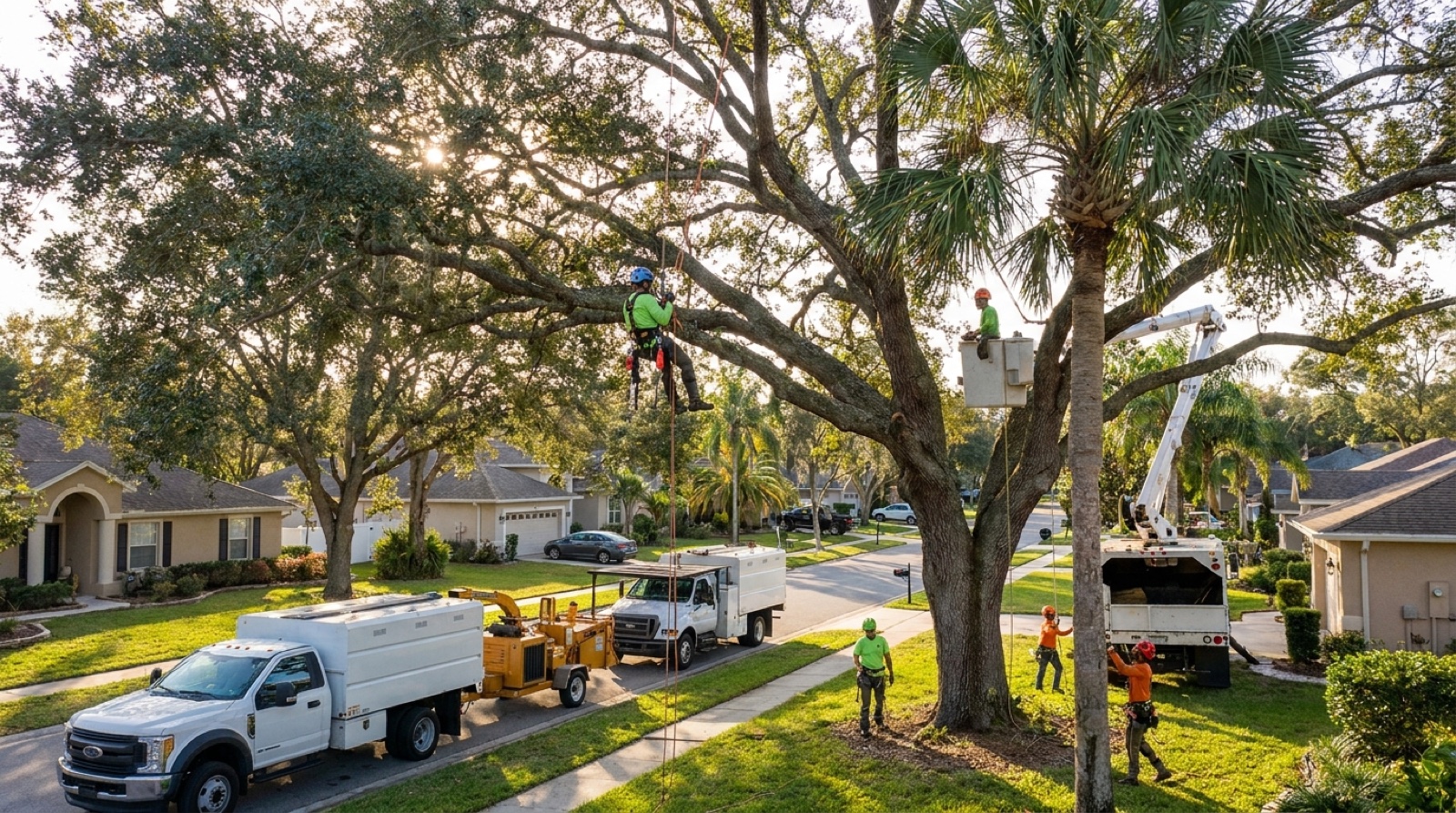
West Palm Beach just handed property owners a few quiet months, and the smart move is to spend them on the trees you already have.
On July 8, 2026, Mayor Keith James postponed votes on the Downtown Master Plan Update until the fall after sustained resident pushback. The proposal would allow towers of up to 25 stories along Flagler Drive and cut the parking developers are required to build.
You can read the reporting on the delay in WLRN's coverage of the pause. The Downtown Neighborhood Association and the West Palm Beach Residents Coalition, which represents more than 30 local associations, both objected to the pace of growth.
None of that changes what a hurricane does to a compromised oak in September. It does change your timeline.
Why a Zoning Delay Matters to a Tree Owner
Construction is the single most common way a healthy South Florida shade tree gets killed slowly. The tree does not die during the build. It dies two or three years later, and by then nobody connects the two events.
The damage is almost always underground. Roots run wide and shallow in our sandy soil, often two to three times past the drip line, and they sit in the top foot or so where every trench, every stockpile of fill, and every compactor lives.
A paused vote means the parcel behind you probably will not break ground this summer. That is your window to establish what your trees look like while nothing is disturbing them.
What to Document Now
- Photos of each significant tree from four sides, with a date on the file
- Trunk diameter measured at roughly four and a half feet up
- Any existing lean, cavity, dead limb, or fungal growth at the base
- Where the canopy edge actually falls relative to your property line
If a neighboring project later damages your root zone, that record is the difference between a claim and an argument. It is also the baseline an arborist needs to tell whether decline is new.
The Trees That Will Not Survive an Active Season Untouched
Set the zoning debate aside for a moment. It is mid July, we are inside hurricane season, and some trees in Palm Beach County are already past the point where trimming helps.
A tree with a hollow trunk, significant deadwood in the upper canopy, or roots severed on one side by past work is not a pruning candidate. It is a hazard, and the honest answer is taking the declining tree out before a storm does it on its own schedule.
Everything else usually benefits from selective thinning rather than removal. Properly done structural pruning and canopy work reduces the sail area a tropical system pushes against without stripping the tree of the leaves it needs to recover.
Hurricane Pruning Is Not Hat Racking
Every year we see topped trees around West Palm Beach and Boynton Beach that were cut back to stubs in the name of storm prep. Those cuts trigger a burst of weak, fast growing shoots attached to nothing but bark.
Two seasons later that tree is more dangerous than it was before. If a tree genuinely carries too much weight or height for its structure, the correct approach is a measured reduction that respects the branch collars, or in some cases cabling to support a weak union.
Sorting Your Own Trees Before Fall
| What you see | What it usually means | Reasonable next step |
|---|---|---|
| Dead limbs in the top third | Root stress or decline | Arborist assessment, not a quick trim |
| Mushrooms at the trunk base | Internal decay, often advanced | Treat as a hazard until proven otherwise |
| New lean after a storm | Root plate has shifted | Removal is likely |
| Dense, crowded interior canopy | Normal growth | Selective thinning before peak season |
| Old stump near a new build area | Termite and settlement risk | Grind it out |
That last row matters more than people expect. Leftover stumps in FL attract subterranean termites and rot into voids under pavers and slabs, which is why grinding the stump and surface roots out belongs in the same visit as the removal.
If You Are the One Building
Commercial owners and developers watching the fall vote have a different problem. Site plans in Palm Beach County get reviewed against what is on the ground, and mature specimen trees are worth protecting for reasons beyond compliance.
Deciding early which trees stay is cheaper than discovering mid build that the crane cannot swing. That is where commercial crews and site work pay for themselves, and where selective clearing that leaves the good trees standing beats scraping a lot flat.
The Practical Version
Fall is when the vote happens. September and October are also when Atlantic systems tend to find South Florida.
Waiting to look at your trees until both of those arrive at once is how people end up on a two week waitlist with a limb through a roof. If you want an honest read on what is standing on your property in West Palm Beach, Delray Beach, Boca Raton, or anywhere in the county, get in touch for a quote or call (561) 461-6013.
The trees do not care what the city council decides in the fall. They care about what you do in July.